

Day in the life13 min
What a supermarket home delivery driver does on a shift, from van checks to the last doorstep, plus pay, licence rules and how to get the job.
By UK Retail Jobs editorial team — We write plain-English guides to finding and doing retail work in the UK. Every figure is checked against a named source.
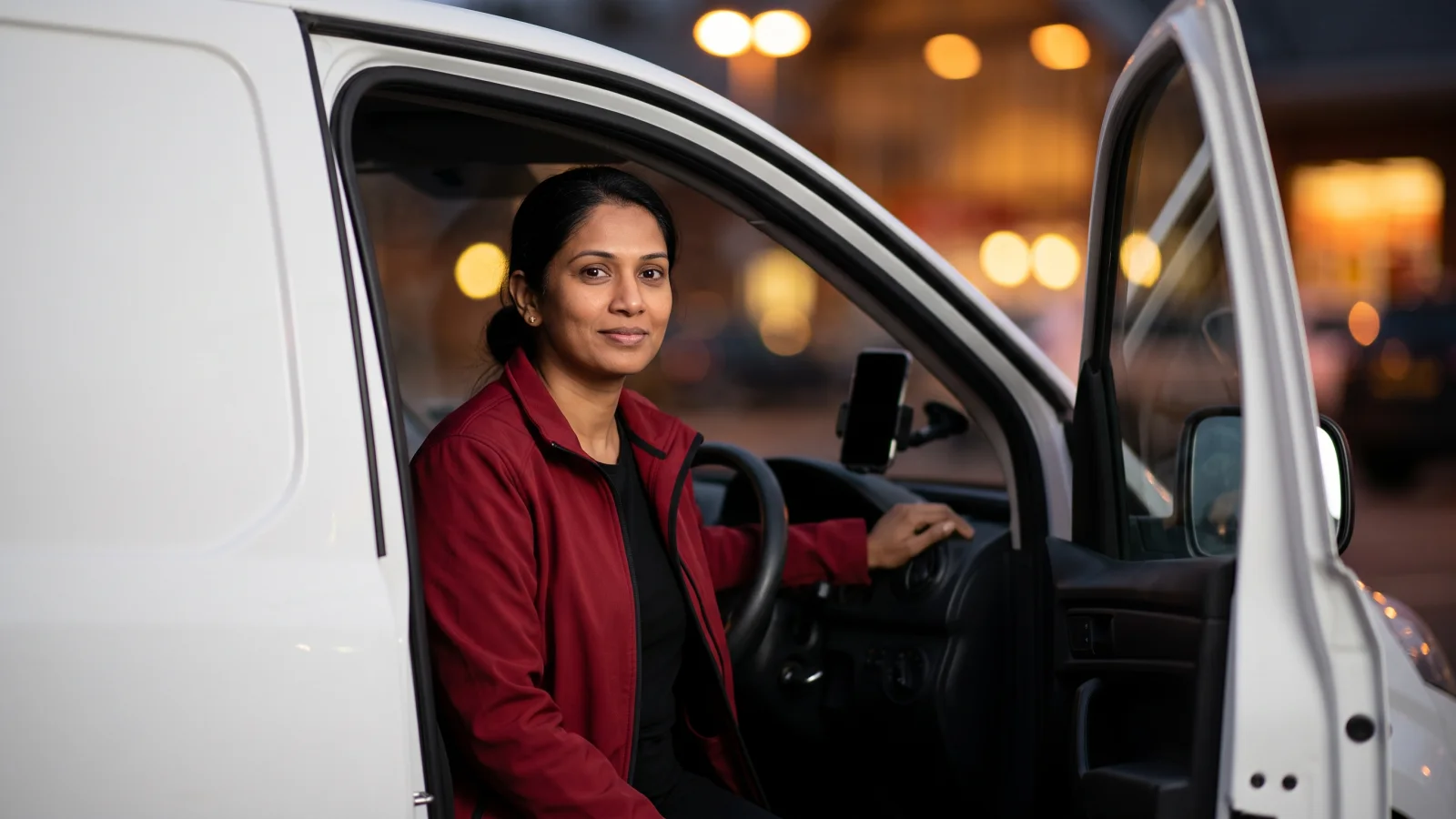
This is a composite, built from supermarket job adverts, retailers' careers pages and official guidance. "Priya" is not a real person. Her shift shows what a typical day looks like for a home delivery driver at a big UK supermarket. The pay, rules and benefits in this piece come from real sources, and each one says when we checked it.
When your online food shop turns up at the door, the driver is the only person from the supermarket you meet. They check the van, load the shopping, drive the route and carry every crate to your step. Here is what that day is really like.
A home delivery driver takes customers' online grocery orders from the store to their homes, inside a booked time slot. You check the van, load the orders, drive a planned route and hand the shopping over at each door.
The job has three parts. There is the driving, which is the part most people picture. There is the lifting, because you carry the shopping from the van to the door. And there is the customer service, because you explain any swapped items and deal with questions on the doorstep.
Supermarkets use slightly different titles. Tesco and Sainsbury's both advertised "Customer Delivery Driver" roles when we checked in September 2026. You may also see "home delivery driver" or "home shopping driver". The work is much the same.
Priya's shift starts at 6am, so she gets to the store a little early. She signs in, puts on her uniform and picks up the device that holds her route for the day. The Sainsbury's advert asks for drivers who are confident learning to use route and delivery technology.
Early starts are common. The Sainsbury's advert we read in Cannock had an availability window of 6am to 2pm on Fridays, Saturdays and Sundays. Not every driver works mornings, though. A Tesco advert we read in York had windows running into the evening, up to 10:15pm on a Monday and 11pm on a Saturday.
Both retailers plan shifts inside those windows. Sainsbury's says it shares shifts three weeks ahead. Tesco says you get at least three weeks' notice. That helps if you have childcare or a second job to plan around.
Before Priya drives anywhere, she checks the van. This is not optional. It is part of the job in every advert we read.
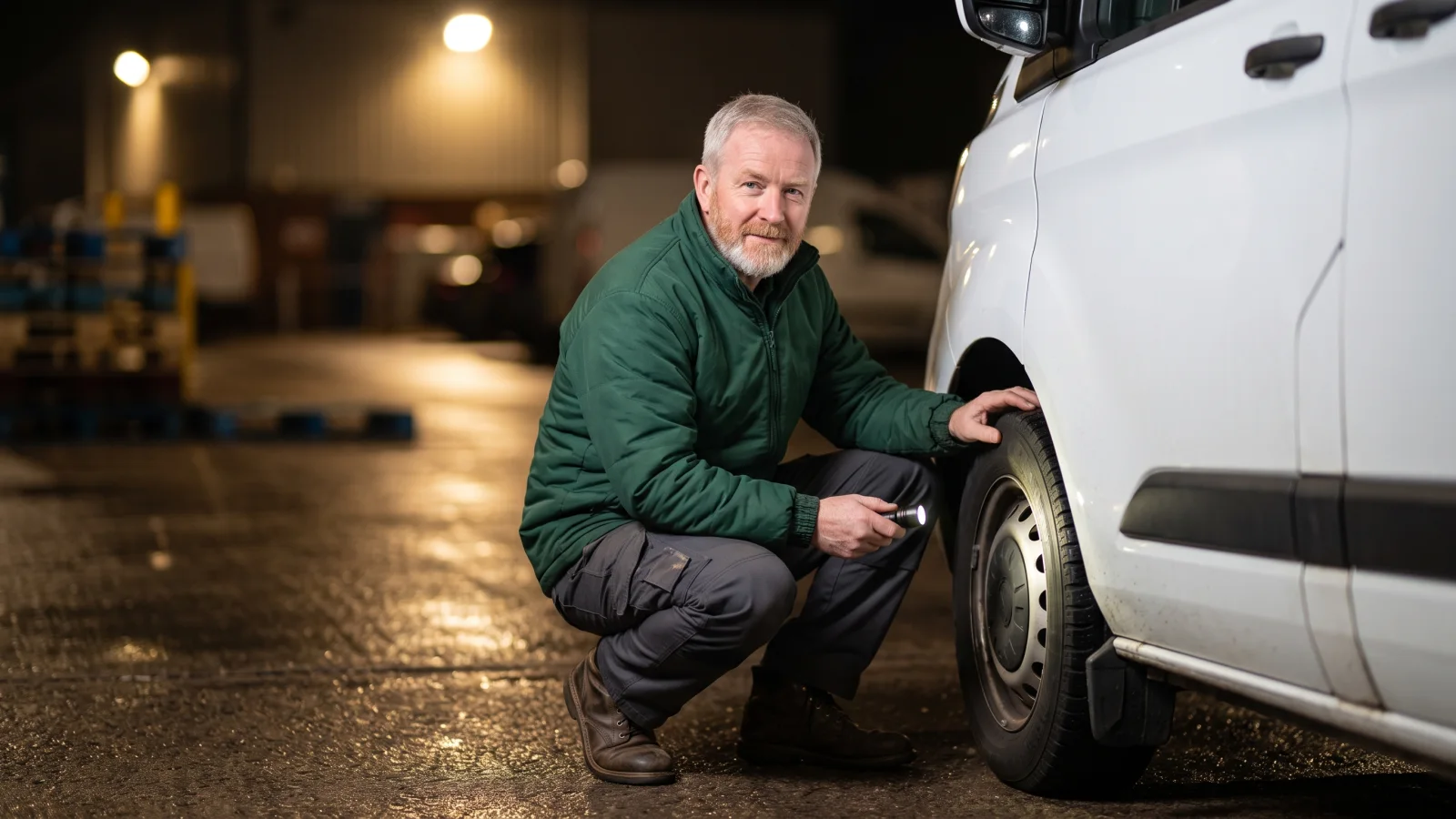
Priya walks round the van and looks for damage, checks the tyres and lights, and makes sure the van is clean and tidy inside. If something is wrong, she reports it before she sets off. The Health and Safety Executive (HSE) says workers who drive for work should check their vehicle is roadworthy and report any damage.
Next, the orders go on the van. The online team has already picked them in the store. You can read about that side of the work in our day in the life of an online grocery picker.
Priya loads the crates in the right order for her route, so the first drop is easy to reach. She makes sure nothing can slide about. The Sainsbury's advert says drivers use a 3.5 tonne refrigerated van, which keeps chilled food cold between stops.
A normal car licence (category B) is usually enough. GOV.UK says a category B licence, if you passed your test on or after 1 January 1997, lets you drive vehicles up to 3,500kg. That limit rises to 4,250kg for electric or hydrogen vehicles.
The first drop is often the quickest, because the roads are quiet. Priya follows the route on her device, parks safely and carries the crates to the door.
This is the physical part of the job. The Sainsbury's advert says you move containers weighing up to 15kg, again and again. It also says some homes have steps, lifts or a longer walk from the van. A fourth-floor flat with a broken lift is part of the day.
Priya lifts with her knees bent and the crate close to her body. She makes more trips rather than stacking crates too high. If your feet and back are new to this kind of work, our guide on standing all day at work has tips that help drivers too.
At the door, Priya greets the customer and hands over the shopping. If any items were swapped for something similar, she explains the swaps. If a customer is unhappy with a swap, she follows her store's process.

The Tesco advert lists telling customers about changes to their order as a core duty. Most customers are friendly. A few are not, especially if something is missing. Our guide on dealing with difficult customers covers how to stay calm and keep things simple.
Something always changes during a shift. Roadworks, a road closed by an accident, or a customer who is not at home can all put the route behind.
Each customer has booked a time slot, so timing matters. If Priya is running late, she lets the next customers know. The Sainsbury's advert says keeping customers informed of delays is part of the job. Tesco's advert talks about delivering within the customer's slot.
The route and messages are on a device, but the law on phones is strict. GOV.UK says you must not hold a phone or sat nav while driving. You can use one hands-free, for example in a holder that does not block your view. You can only pick it up when you are safely parked, or in an emergency.
The penalty is 6 points and a £200 fine. If you passed your test in the last two years, 6 points means you lose your licence. For a delivery driver, that would also mean losing the job.
Some vans now have cameras. Sainsbury's says it has fitted in-cab AI cameras that watch driver behaviour and help make sure drivers follow road laws. It is worth asking at interview what any camera records and who sees it.
A break usually comes between runs, back at the store. On a longer shift you have a legal right to one.
GOV.UK says workers have the right to an uninterrupted 20-minute rest break if they work more than 6 hours a day. The break does not have to be paid, as that depends on your contract. You also have the right to 11 hours' rest between working days.

Driving has extra rules on top. GOV.UK says the GB domestic drivers' hours rules apply to goods vehicles under 3.5 tonnes. For goods vehicles, those rules limit driving to 10 hours a day and duty to 11 hours, with some exemptions. Your employer plans your routes, but you should know the limits exist.
Tiredness is a real risk on the road. HSE says workers who drive for work should not drive when they are tired. If you feel too tired to drive safely, tell your manager.
After the last drop, Priya drives back to the store. She empties the van of any returned items and the empty crates, and leaves the van clean for the next driver.
The job is not always only driving. The Sainsbury's advert says that when you are not out on deliveries, you may help across the store. That could mean filling shelves or helping the online team get the next run ready.
Priya hands back her device, checks out and finishes at 2pm. On a later shift, the pattern is the same, just with evening traffic and darker roads.
Supermarket delivery drivers are paid by the hour. Here is what two retailers advertised when we checked in September 2026.
| Retailer and advert | Hourly pay | Hours on the advert |
|---|---|---|
| Tesco Customer Delivery Driver (York and Scunthorpe) | £14.18 an hour, or £15.45 in stores inside the M25 | 16 guaranteed hours a week (12 also possible), or full time |
| Sainsbury's Customer Delivery Driver (Cannock) | £14.73 an hour | 16 hours a week, part time |
| Argos Delivery Driver (Sainsbury's logistics sites) | £14.23 an hour | Fixed-term roles |
Tesco's advert also says some locations may offer extra payments. Pay changes often, so always check the advert.
Whatever you are offered, the law sets a floor. From 1 April 2026, the National Living Wage is £12.71 an hour for workers aged 21 and over, and £10.85 an hour for 18 to 20-year-olds.
The adverts we read listed a staff discount, a pension and paid holiday. Tesco listed a 10% discount, rising to 15% on pay day weekends, and pension matching up to 7.5%. Sainsbury's listed a 10% discount, rising to 15% at Sainsbury's on Fridays and Saturdays, and pension matching of 4% to 7.5%.
You need a full driving licence held for at least a year, only a few penalty points and the right to work in the UK. The exact rules differ between retailers.
An employer may ask to check your licence. On GOV.UK you can view your driving record, see any penalty points and create a "check code" to share it. The check code lasts 21 days.
Say clearly which days and times you can work. Mention any driving you have done for work, even informally. And give an example of good customer service, because drivers are the face of the store at the door. Our guides on getting a job at Tesco and Sainsbury's explain how their applications work.
It suits people who like driving, like working on their own for much of the day, and do not mind lifting. It is less suited to anyone who hates traffic or cannot manage stairs with heavy crates.
Usually not. The Sainsbury's advert we read used a 3.5 tonne van, and GOV.UK says a standard category B car licence covers vehicles up to 3,500kg if you passed on or after 1 January 1997. Check the advert, as the retailer will say what it needs.
Not at the supermarket adverts we read. Sainsbury's asks for drivers to be over 18, and both retailers want you to have held your licence for 12 months.
Not in the adverts we read. They describe drivers loading and checking the store's van, and Sainsbury's says its drivers use a refrigerated van. If you are not sure, ask at interview.
The Sainsbury's advert says containers weigh up to 15kg. You will lift them many times in a shift, sometimes up stairs.
Both exist. The adverts we read included part-time roles with 12 or 16 hours a week and a full-time role at Tesco.
We collect retail jobs from retailers' careers sites and job boards, so you can search them in one place. Try our delivery driver jobs search to see what is open near you. Our membership adds job alerts and a tracker for your applications. You can read how we check our facts in our editorial policy.
_This is general information, not legal or careers advice. Check the retailer's advert and the official source before you act._
Where to look next
Keep reading


We would like to set one optional cookie that recognises your browser when you come back, so we can tell returning visitors from new ones. It stays off unless you say yes, and you can change your mind at any time. Cookies that keep you signed in are always on. Read our cookie policy