


Work life14 min
Practical ways to sleep well in the day, eat well at night and stay alert on a retail night shift, plus your rights as a night worker in the UK.
By UK Retail Jobs editorial team — We write plain-English guides to finding and doing retail work in the UK. Every figure is checked against a named source.

Working nights can suit you well. The shop is quiet, the work is steady and the hours can fit around family or study. But your body is built to sleep at night, so working then takes some planning. This guide sets out practical ways to sleep in the day, eat well at night and keep your energy up, using advice from the Health and Safety Executive (HSE) and the NHS. It also explains your legal rights as a night worker.
Most of this applies to any night job in retail, from filling shelves in a supermarket to picking online orders in a warehouse.
Night shifts are hard because your body clock wants you asleep at night and awake in the day. The HSE says daytime sleep is usually lighter and shorter than sleep at night. It is also broken more easily, by daytime noise, warmer temperatures and light.
The result is often a build-up of tiredness. The HSE lists what fatigue does to you: slower reactions, memory lapses, poorer attention and a weaker sense of risk. It also says accidents and injuries are more common on night shifts, after a long run of shifts and when breaks are too short.
None of this means you cannot work nights well. Plenty of people do it for years. It just means sleep, food and rest need more thought than on a day job.
The HSE says most adults need 7 to 8 hours of sleep a day, though this can fall as you get older. The NHS puts the average adult need at 7 to 9 hours. If you cannot get that much in one go, the HSE says rest still helps.
A simple sleep diary can show you what works. Write down when you slept, for how long, and how you felt on your next shift. After a couple of weeks, patterns start to show.
Make your bedroom as dark, quiet and cool as you can. Daytime brings light, traffic, deliveries and family noise, so you have to block them out on purpose.
The HSE and NHS both give practical tips. Here are the main ones, with a cheap way to do each.
| Problem | What helps | Low-cost option |
|---|---|---|
| Daylight | Heavy curtains or blackout blinds | An eye mask |
| Street and household noise | Earplugs or white noise | A fan, or a free white noise app on a quiet setting |
| A warm room | Keep the room cool | Open a window before you go to bed, then close the curtains |
| Phone alerts | Silence your phone | Turn on "do not disturb" for your sleep hours |
| People knocking or calling | Ask your household for quiet hours | A note on the front door about deliveries |
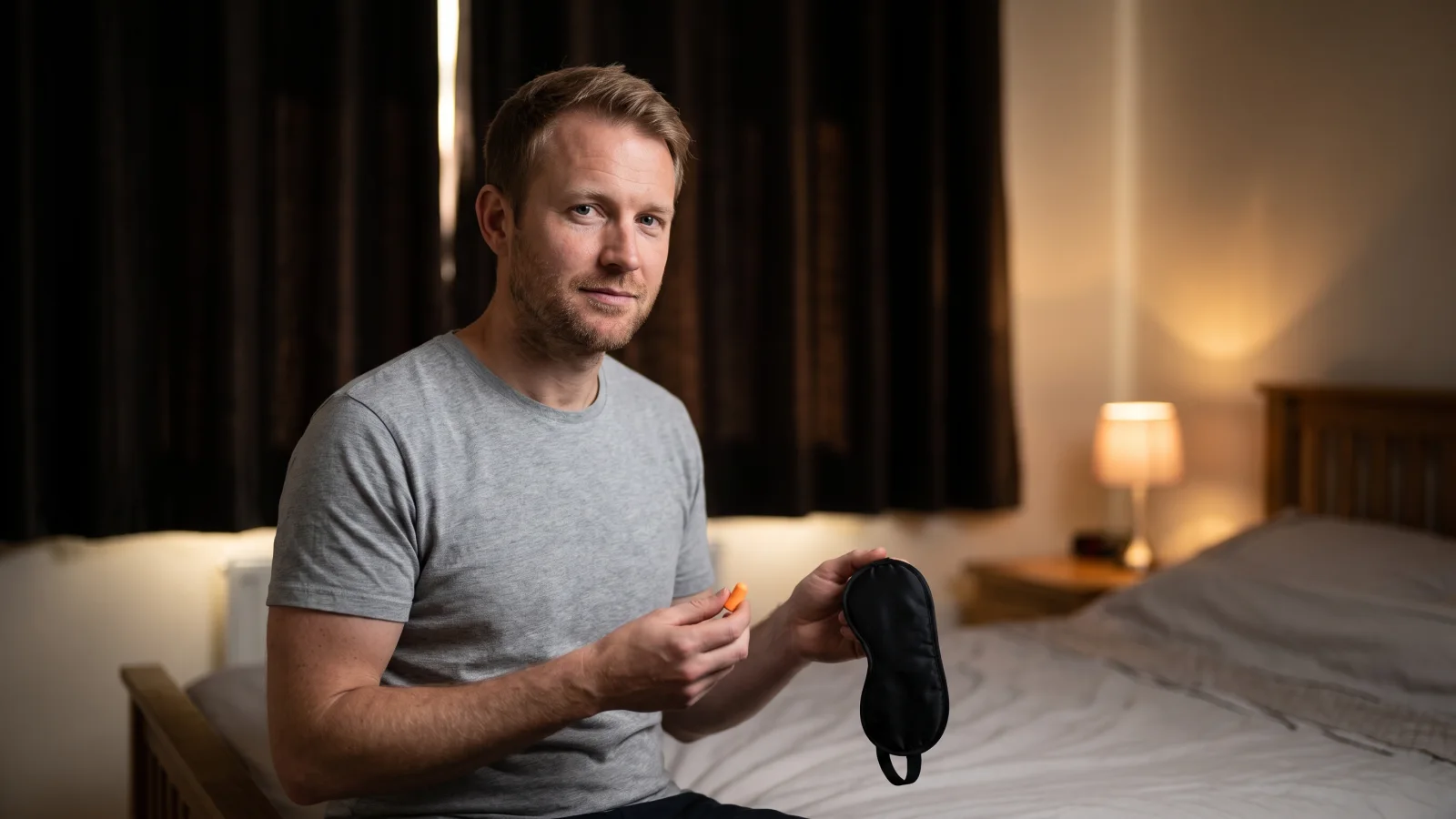
The HSE also suggests keeping your bedroom just for sleep. Try not to eat, work or watch TV in bed. Over time, your brain links the room with sleeping.
Tell the people you live with when you sleep. A shared calendar or a rota on the fridge stops a lot of accidental wake-ups.
There is no single right answer, so try a few patterns and stick with what works. The HSE suggests trying different bedtimes, such as going to bed soon after you get home, or staying up and sleeping before your next shift.
The HSE suggests a short sleep before your first night shift. This takes the edge off the long stretch awake.
Once you find a pattern that works, the HSE says try to keep to it. NHS Every Mind Matters says going to bed and getting up at similar times helps your body know when to sleep. That is harder on a changing rota, but even a rough routine helps.
Wind down before bed, just as you would at night. The HSE suggests a short walk, a book, music or a hot bath. NHS Every Mind Matters suggests putting your phone away for an hour before you sleep, as screen light can make it harder to drop off. If worries keep you up, try writing them down first.
If you are still awake after about 20 minutes, NHS Every Mind Matters says get up and do something calm, such as reading.
The HSE suggests a short sleep after your final night, then going to bed earlier that evening. This helps you switch back to days for your time off.
This depends on your rota, and you may not get to choose it. The HSE's good practice guidance for employers suggests limiting night shifts to two or three in a row. If you are offered a choice of patterns, that is worth knowing.
Eat little and often, and choose light, plain food. The HSE says regular light meals and snacks are less likely to make you drowsy than one big meal.
Tummy problems are common on nights. The HSE puts this down to a disturbed body clock and a poor diet. Planning your meals makes a real difference, and it saves money compared with buying snacks on shift.
| Better choices | Try to avoid |
|---|---|
| Pasta, rice and bread | Fatty or fried food |
| Salad, fruit and vegetables | Spicy food |
| Milk products | One large, heavy meal |
| Plenty of fluid, such as water | Sugary foods like chocolate, which give a quick lift and then a dip |
Try to eat a proper meal before you leave for work, so you do not start your shift hungry. Then take two or three light snacks for your breaks. A sandwich, a pot of pasta salad and some fruit is an easy, cheap mix.
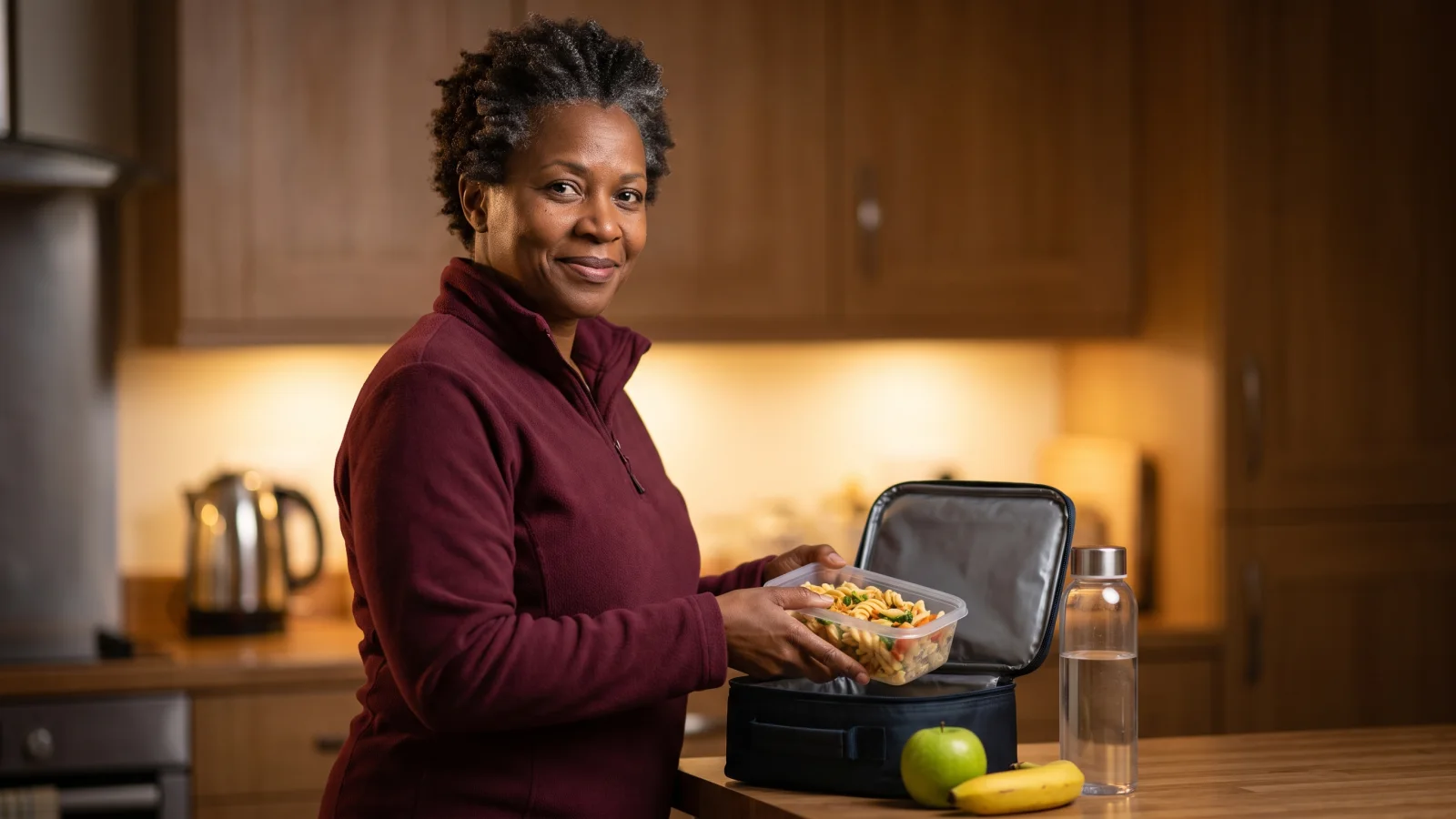
The HSE also says not to go to bed hungry, so have a light meal or snack before you sleep. The NHS advises against a large meal late at night, and so does the HSE. Save your biggest meal for when you are awake.
The NHS says most people should aim for 6 to 8 cups or glasses of fluid a day. The HSE says being dehydrated makes both your thinking and your body work less well. Shop floors and warehouses can be dry and warm, so keep a bottle of water in your locker.
Drink steadily through the shift, then slow down near the end. The HSE warns that drinking a lot just before bed can wake you up needing the toilet.
Caffeine can help now and then, but it is not a fix for poor sleep. The HSE calls it a mild stimulant that can briefly sharpen your reactions. It warns against relying on it every shift.
Caffeine is in coffee, tea, cola and energy drinks. Timing matters most. The NHS advises no tea or coffee for at least 6 hours before bed. If you finish at 6am and go straight to bed, that means your last coffee is around midnight, not at your 4am break.
Also think about when the caffeine wears off. The HSE points out the drop can hit when you are driving home.
A drink after a night shift may feel like it helps you sleep. The HSE says the opposite: alcohol may help you drop off, but it leads to broken sleep and waking early. The NHS also advises no alcohol for at least 6 hours before bed.
The HSE does not recommend sleeping pills for regular use, as you can come to depend on them. If you are struggling to sleep, talk to your GP instead of buying something over the counter.
Keep moving, keep the lights up and keep talking. The HSE has simple tips for staying alert at work.
Many retail night jobs involve lots of lifting and walking, which can help. The quiet hours before dawn are often the hardest, so plan something active for then if you can.
The HSE says about 30 minutes of activity a day helps sleep and health, and walking and housework count. Try to fit it in when you wake up, not just before bed. The NHS says to avoid exercise in the 4 hours before you sleep, and the HSE agrees that hard exercise before bed can keep you awake.
Plan your trip home before you are tired. The Highway Code says driving tired greatly raises your risk of a crash. It also says natural alertness is at its lowest between midnight and 6am.
The HSE suggests some safer options:
If you cycle or walk home, the same tiredness applies. Wear something bright, and take extra care at junctions.

You have extra legal protection as a night worker in the UK, including a free health assessment. GOV.UK says you count as a night worker if you regularly work at least 3 hours in the night period, which is 11pm to 6am unless you and your employer agree different times.
| Your right | What GOV.UK says |
|---|---|
| Hours limit | Night workers should not work more than 8 hours in 24 on average, usually worked out over 17 weeks. You cannot opt out of this. |
| Retail exception | The limit does not apply in industries with peak periods, and retail is one of them. |
| Health assessment | Your employer must offer a free health assessment before you start nights, then regularly after that. You do not have to accept it. |
| If nights harm your health | If a doctor says night work is harming your health, your employer must find you other suitable work where possible. |
| Rest break | If you work more than 6 hours a day, you are entitled to one 20-minute break. Whether it is paid depends on your contract. |
| Rest between shifts | You are entitled to 11 hours' rest between working days, and 24 hours off each week (or 48 hours each fortnight). |
| Under-18s | Young workers cannot work between midnight and 4am. There are other limits on nights, with some exceptions for retail. |
Your contract may give you more than these legal minimums, so check it. If you have a question about your rights, ACAS gives free advice online and through its helpline.
The NHS says shift work is one of the most common causes of insomnia. See your GP if you have had trouble sleeping for months, changing your habits has not helped, or it is making daily life hard.
It also helps to look after the social side. The HSE suggests sharing your rota with friends and family and planning time together on your days off. Night work can feel lonely, so keep those links strong.
It depends on your employer. Some retailers pay a higher rate for nights and some do not. The job advert or contract should say, so check before you apply.
It varies by retailer and role, so check the advert for the exact start and finish times. Remember that a shift of more than 6 hours gives you the right to a 20-minute break.
The NHS advises people with insomnia not to nap in the day. For night workers it is different. The HSE suggests a short nap before your first night shift to cut down tiredness.
Only in a limited way. GOV.UK says under-18s cannot work between midnight and 4am. There are other limits on late evening and early morning work, with some exceptions for retail.
Talk to your manager first. They may be able to change your pattern or move you to day shifts. If a doctor says nights are harming your health, your employer must look for other suitable work for you where possible.
We collect retail jobs from retailers' careers sites and job boards, so you can search them in one place. Try our night shift jobs search to see what is advertised near you. If you are new to retail, our guide to retail jobs with no experience is a good place to start. Big supermarkets hire lots of night staff, so our guides on getting a job at Tesco and getting a job at Aldi may help too.
Our membership adds job alerts and a tracker for your applications. You can read how we check our facts in our editorial policy.
_This is general information, not legal, medical or careers advice. Check the retailer's advert and the official source before you act._
Where to look next
Keep reading


We would like to set one optional cookie that recognises your browser when you come back, so we can tell returning visitors from new ones. It stays off unless you say yes, and you can change your mind at any time. Cookies that keep you signed in are always on. Read our cookie policy