


Industry12 min
What self-checkouts mean for shop jobs, what staff on the self-scan area do, the new digital ID rules for alcohol, and the skills that matter now.
By UK Retail Jobs editorial team — We write plain-English guides to finding and doing retail work in the UK. Every figure is checked against a named source.
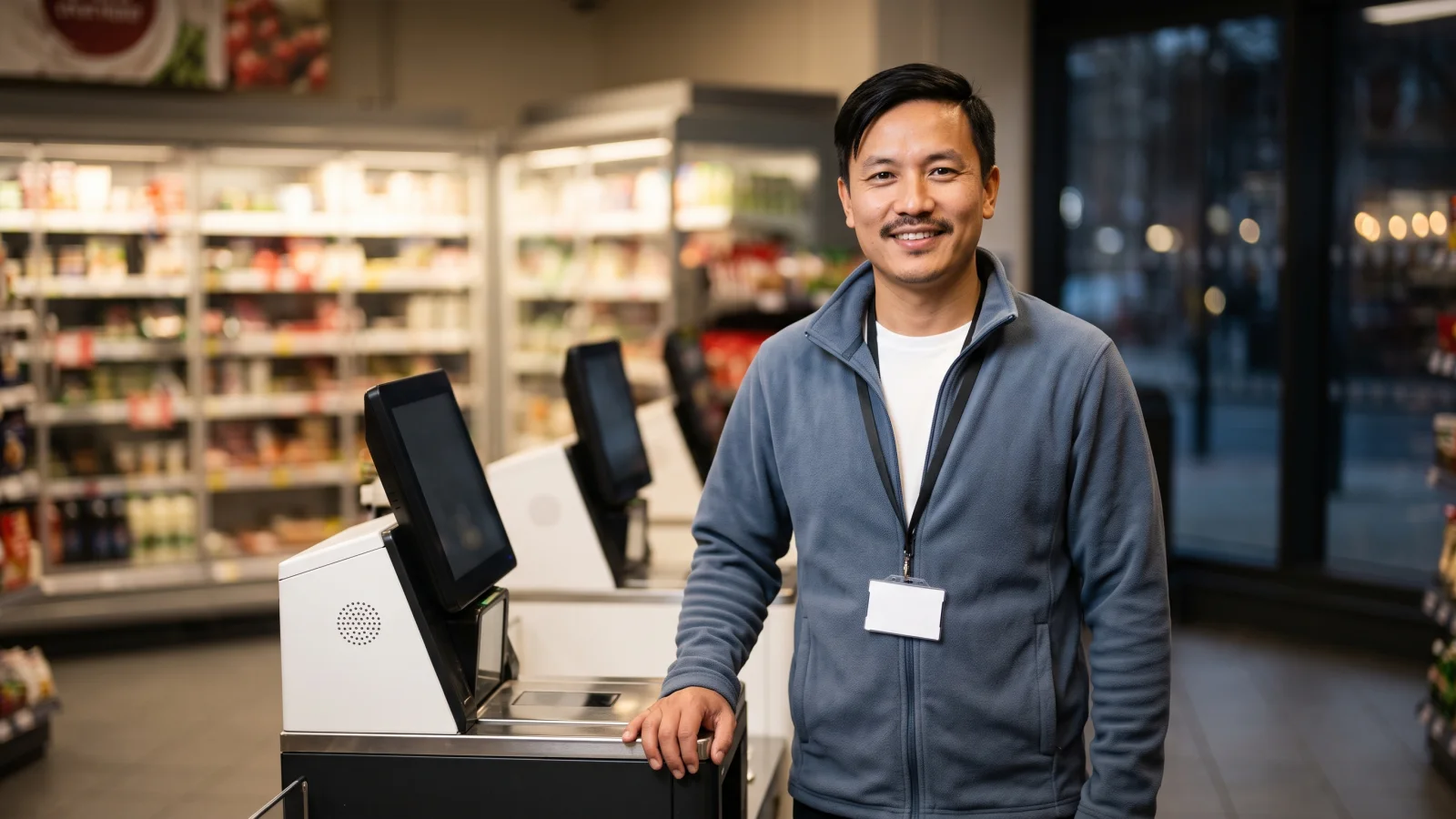
Self-checkouts have not emptied shops of staff, but they have changed what many checkout jobs look like. Fewer people sit behind a till scanning every item. More people stand in the self-scan area, approving alcohol, fixing "unexpected item" errors and helping customers who get stuck. This post explains what is changing, what the evidence says about jobs, and a new law from September 2026 that affects how age checks work at the self-checkout.
We have kept to what official sources and retailers' own statements say. Where nobody has published a reliable number, we say so.
The main change is that one member of staff now often looks after several self-service tills, instead of one staffed till each. The work has moved from scanning to supervising, solving problems and helping people.
In a big supermarket, you might see a row of staffed tills next to a bank of self-scan machines. Some shops also offer handheld scanners or phone apps that let customers scan as they shop. In each case, someone still has to check age-restricted items, deal with errors and keep an eye on the area.
That means checkout jobs still exist. They just ask for a slightly different mix of skills. Being quick on a till matters less. Being calm, helpful and alert matters more.
We found no official UK figure for how many jobs self-checkouts have replaced. Retail employment has fallen, but the retail industry's own body blames rising employment costs, not technology.
The British Retail Consortium (BRC) publishes retail job figures based on data from the Office for National Statistics (ONS). Its September 2026 release gave these numbers:
| Measure | Figure | Source |
|---|---|---|
| Retail jobs in June 2026 | 2.75 million | BRC, using ONS data |
| Average over the four quarters to mid-2026 | 2.78 million, the lowest on record | BRC, using ONS data |
| Change on a year earlier | 62,000 fewer jobs | BRC, using ONS data |
| Change on a decade earlier | 410,000 fewer jobs | BRC, using ONS data |
| Full-time and part-time split (four-quarter average) | 1.29 million full-time, 1.50 million part-time | BRC, using ONS data |
The BRC links these falls to higher employer National Insurance and National Living Wage costs. Its release does not mention self-checkouts at all. That does not prove technology plays no part. It does mean you should be wary of anyone who says self-checkouts alone caused the fall.
In 2019, the ONS looked at which jobs in England were most at risk of having some of their tasks automated. It found about 1.5 million jobs at high risk, which was 7.4% of the jobs it studied. It gave supermarket self-checkouts as an example, saying they reduce the number of people needed on the checkouts.
The ONS measured the risk to tasks that workers do, not the risk of whole jobs vanishing. The three occupations with the highest risk were waiters and waitresses, shelf fillers, and elementary sales occupations. It also found that women, people aged 20 to 24 and part-time workers were more likely to be in high-risk roles. Many retail workers fit at least one of those groups.
The study is now several years old. Treat it as a guide to which kinds of tasks are easiest to automate, not as a forecast for your own job.
Staff in the self-checkout area supervise the machines and the people using them. The job mixes customer service, problem-solving and checks that the law requires.
Alcohol, knives, some medicines and other items need an age check. When a customer scans one, the machine usually stops and waits for a member of staff. You decide whether to ask for ID, check it, and approve or refuse the sale. Your employer will have a policy on who to ask, and you must follow it.
Self-scan machines stop for all sorts of reasons. A bag weighs the wrong amount, a barcode will not scan, or a customer cannot find loose fruit on the screen. Your job is to fix the problem quickly and politely, so the queue keeps moving.
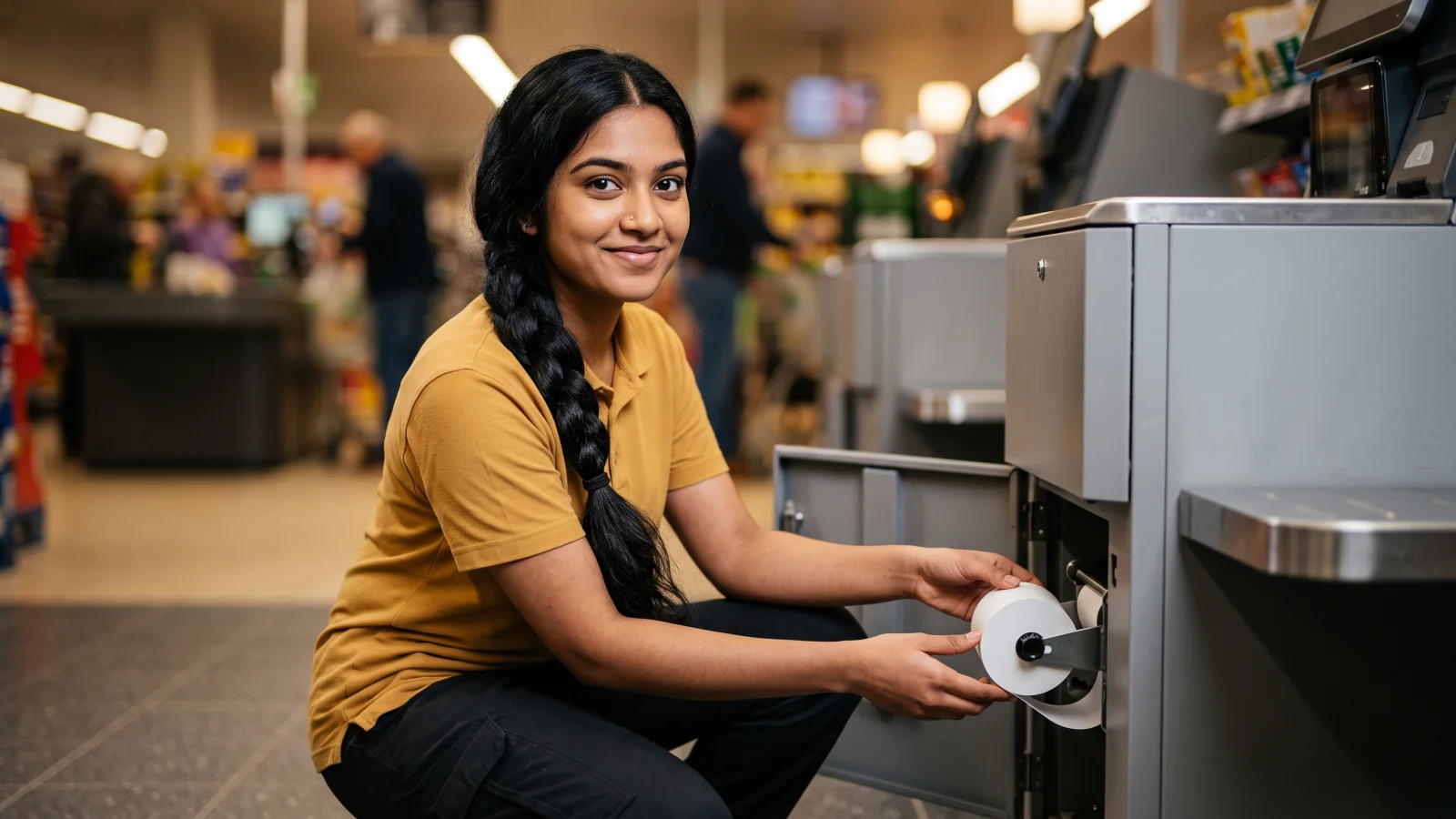
Some customers find the machines hard to use or simply prefer a person. Helping them without making them feel rushed is a big part of the role.
You are also an extra pair of eyes. You notice when someone needs help, when a machine is out of paper, or when something does not look right. If something looks wrong, follow your shop's policy on who to tell.
On many shifts you will still move between tasks. You might cover a staffed till at a busy time, then return to the self-scan area, then fill a gap on the shop floor. If you want a sense of how a full shift feels, read our day in the life of a supermarket checkout assistant.
At least one UK supermarket has decided that staffed tills suit its customers better. The BBC reported that Booths, which trades in northern England, was believed to be the first UK supermarket to move away from self-service tills.
In November 2023, Booths said it would remove self-service tills from all but two of its 28 stores, as reported by the BBC. It kept them in its Keswick and Windermere shops. Its managing director said customers had told the firm the machines could be slow, unreliable and impersonal. It also named problems with scanning loose fruit, vegetables and bakery items, and with age checks for alcohol.
One retailer's choice does not show a trend across the whole industry. When the BBC reported the Booths decision, it described self-service tills as increasingly common. But the Booths decision shows that retailers do weigh the cost of machines against what customers want, and that staffed service can be a selling point.
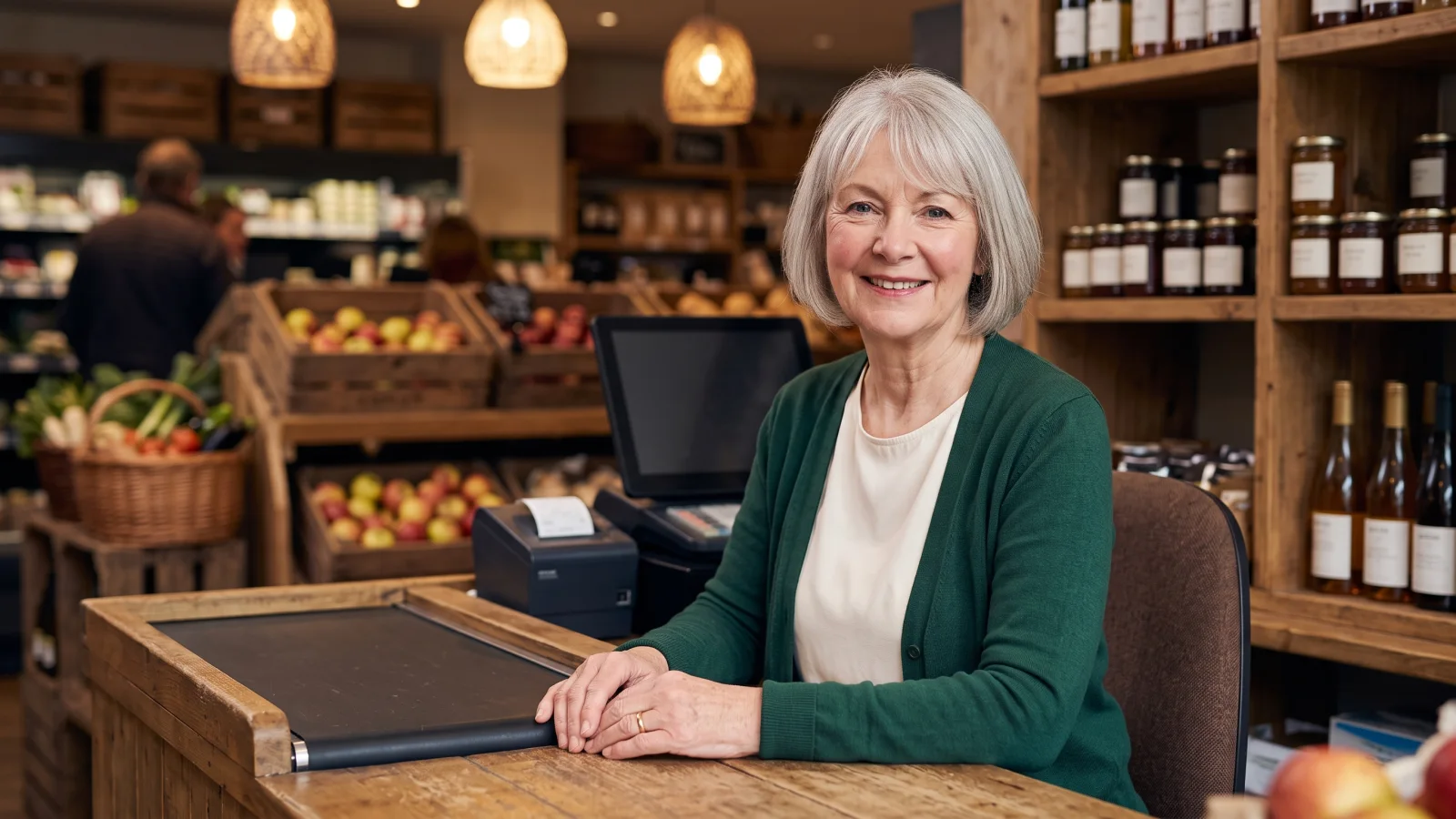
Since 15 September 2026, shops in England and Wales that sell alcohol can accept a digital proof of age, as long as it comes through an approved service. This could change how age checks work at the self-checkout, but it does not remove the need for staff.
The change came in through a new order under the Licensing Act 2003. It lets a shop's age verification policy accept digital ID instead of a physical card or passport. The digital ID must come from a service on the government's register of certified digital verification services.
The government's digital identity team explained how this works in practice in August 2026. The main points are in this table.
| Question | Answer from the government |
|---|---|
| Do shops have to accept digital ID? | No. It is optional. Shops can keep using physical ID only. |
| Do customers have to use it? | No. They can still show a passport or driving licence. |
| Can staff just look at an ID on a phone screen? | No. A digital proof of age must be checked by technology, not by eye. |
| Can shops use face-scanning age estimation for alcohol? | No. Age estimation tools are not allowed for alcohol sales under these rules. |
| Can digital ID be used at self-checkouts? | Yes. |
| Can self-checkouts be left with no staff at all? | No. They must not be completely unsupervised, because of the wider rules on buying for under-18s and on selling to drunk people. |
If your shop starts to accept digital ID, you may need training on a new system. You might approve fewer sales by looking at a card, and more by checking that a digital check has worked. But the government has said self-checkouts must not be completely unsupervised, so someone still needs to be there.
The order covers England and Wales. If you work in Scotland or Northern Ireland, ask your manager how age checks work in your shop. The government has also said it will update its official guidance for licence holders, so the detail may change.
It can. The shopworkers' union Usdaw has named self-service checkouts as one of the things that can lead customers to take their frustration out on staff.
In its 2025 Freedom From Fear survey, published in March 2026, Usdaw said its members had pointed to self-service checkouts, empty shelves and low staffing as triggers. Age checks are another flashpoint. At its 2023 conference, Usdaw backed a "No ID, No Sale" approach, and its general secretary said understaffing often meant one worker was managing the self-service tills.
This matters because the self-checkout role puts you where frustrated customers meet broken machines and age checks. Tell your manager about every incident, however small, so there is a record. Our guide to dealing with difficult customers covers what to say, when to call for help, and the laws that protect shop workers.
The skills that machines cannot easily copy matter most: dealing with people, solving problems and using good judgement. These are the things that make you useful in a shop with fewer staffed tills.
Here are the skills retailers are likely to value on the checkout and self-scan side of the shop:
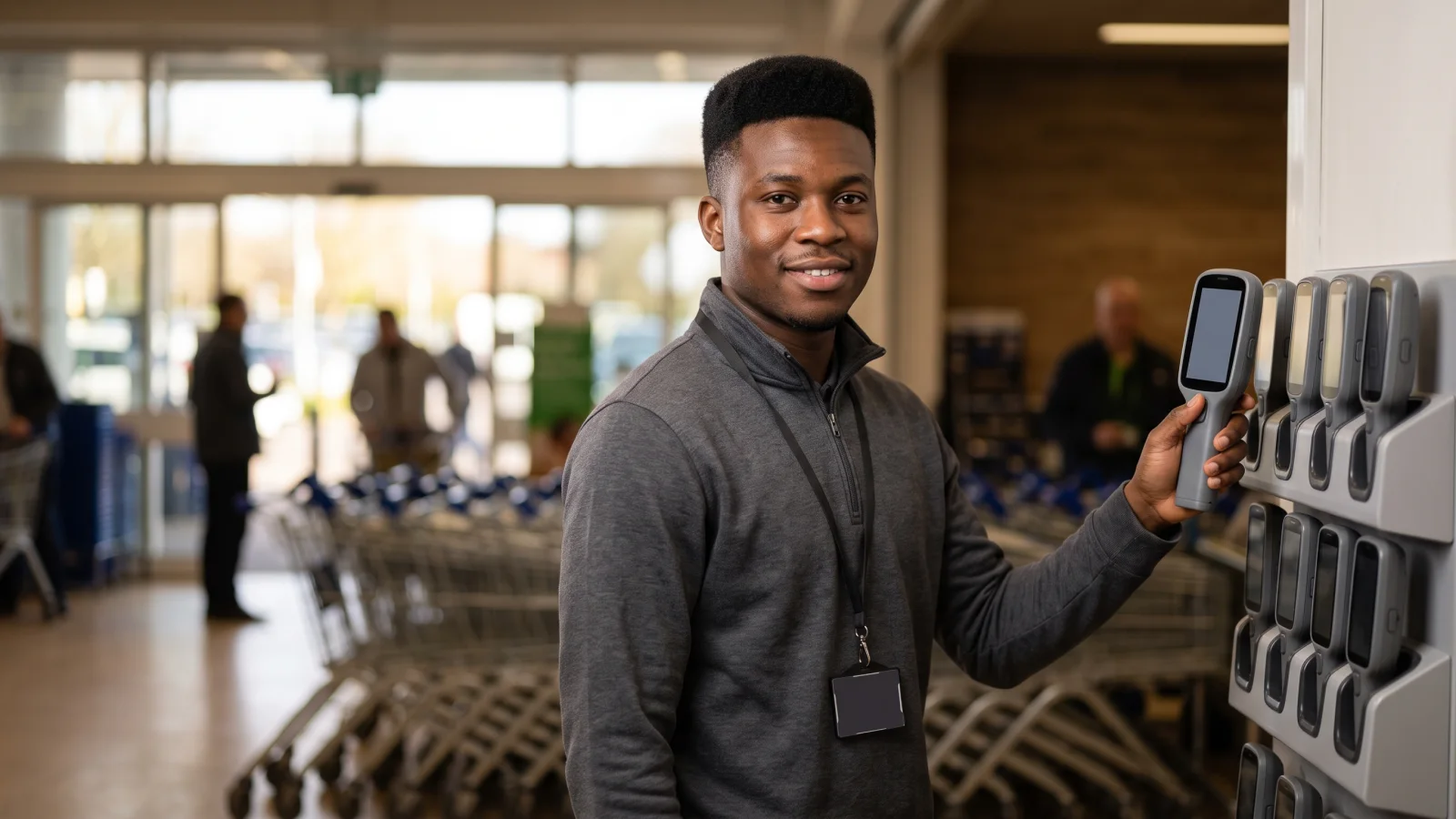
The National Careers Service lists customer service, teamwork, patience under pressure and basic computer skills among the main skills for sales assistants. It also says that, with experience, you can move up to supervisor, department manager or store manager, or into areas like visual merchandising or buying. Our post on retail skills for your CV shows how to describe these strengths so any employer notices them.
Much of the change in retail is about where the work happens, not just whether it exists. Many shops need people for online orders, click and collect, deliveries and night-time stock work, as well as the tills. If you are open to different kinds of retail work, you give yourself more options.
Apply directly on the retailer's careers site, or search a site that collects retail adverts in one place. Checkout work is often advertised under titles such as customer assistant or colleague, not just "cashier".
Retailers use different job titles. Try searching for "checkout", "customer assistant", "retail assistant" and "colleague". You can start with our customer assistant jobs search.
In your application, mention times you have helped people, sorted out a problem, or followed rules under pressure. Retail, hospitality, volunteering and school roles all count. If you have used a handheld scanner or till system before, say so.
Interviewers often ask how you would handle an upset customer or a refused sale. Think of a real example and explain what happened, what you did and how it turned out. Our list of common retail interview questions has more examples and answer outlines.
There is no sign of that. The government has said self-checkouts must not be completely unsupervised when digital ID is used for alcohol, and shops still need people to approve age-restricted items, fix errors and help customers.
Usually not before you start. Retailers train new staff on their own tills, self-scan machines and age-check policy. If your shop starts to accept digital ID, expect extra training on that system.
Yes. If a customer cannot prove their age under your shop's policy, or you think they are buying for someone under 18, you should refuse the sale and tell your manager if there is trouble. Follow your employer's policy.
In England and Wales, since 15 September 2026, shops can choose to accept a digital proof of age from an approved service. Not every shop will accept it, so customers may still need physical ID.
For many people, yes. It teaches customer service, teamwork and handling pressure, and it can lead to supervisor roles. Hours, pay and training vary by retailer, so check each advert.
We collect retail jobs from retailers' careers sites and job boards so you can search them in one place. Browse our checkout jobs search to see what is open near you. Our membership adds job alerts and a tracker for your applications. You can read how we check our facts in our editorial policy.
_This is general information, not legal or careers advice. Check the retailer's advert and the official source before you act._
Where to look next
Keep reading
We would like to set one optional cookie that recognises your browser when you come back, so we can tell returning visitors from new ones. It stays off unless you say yes, and you can change your mind at any time. Cookies that keep you signed in are always on. Read our cookie policy